
Blog
What Is Mincigrap? Benefits, Uses, and Safety

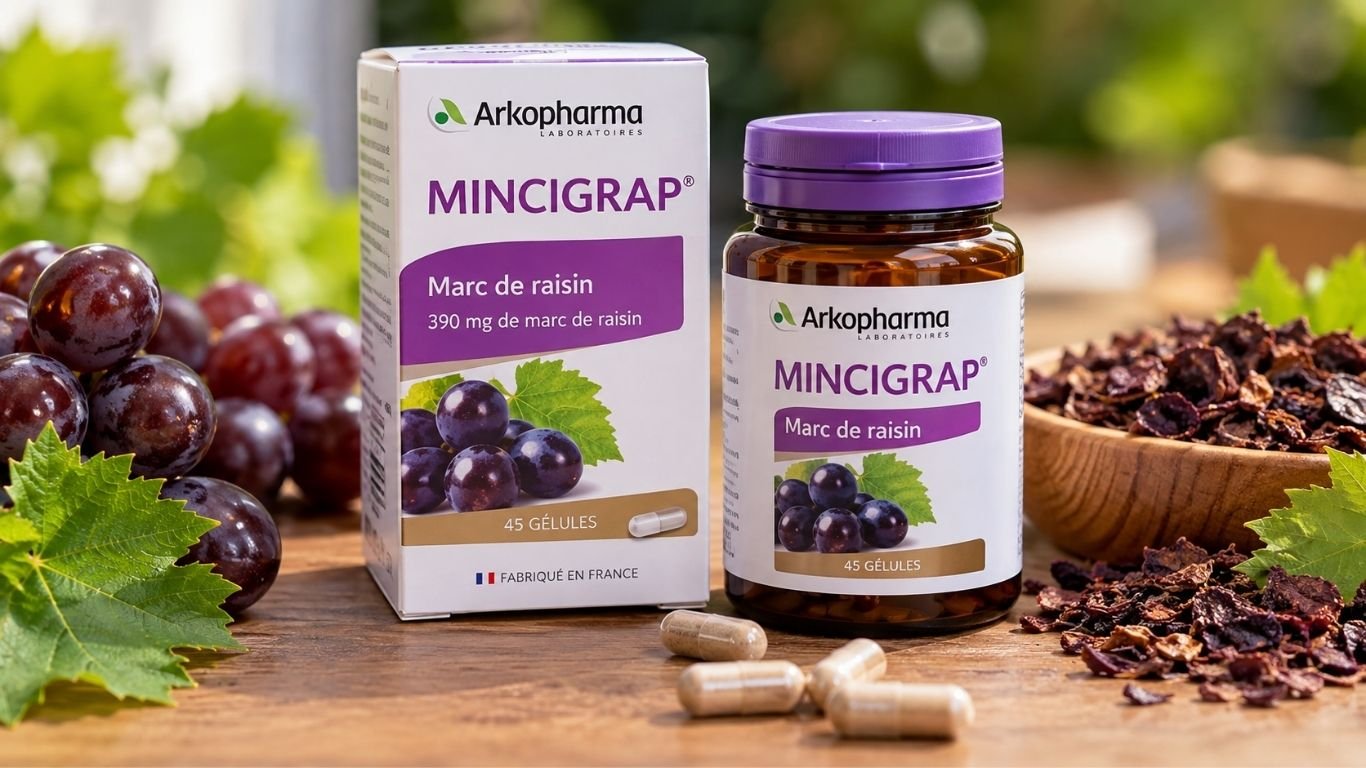
Mincigrap is a plant-based food supplement made by the French company Arkopharma. It contains grape pomace (Vitis vinifera), a natural material left after grapes are pressed. The product is sold under the Arkogélules range and is marketed for weight maintenance and improving the look of cellulite.
A standard bottle contains 45 vegetable capsules, with 390 mg of grape pomace listed per capsule. The supplement contains natural plant compounds, but its claimed benefits are not backed by strong clinical proof. There is also limited research on its safety and long-term effects.
Who Makes Mincigrap?
Arkopharma is a French company that makes plant-based health products. Its range includes herbal capsules, vitamins, minerals, and food supplements. The company sells its products in France and other countries.
This supplement is part of the Arkogélules range. The range includes capsules made from plant ingredients. Each product has its own formula and intended use.
Where Is It Made and Sold?
The product is made by Arkopharma in France. It has been listed by French pharmacy sellers such as Easypara and Giphar. Some online stores outside France also sell Arkopharma products.
Some sellers use the name Arkogélules Marc de Raisin instead of Mincigrap. Buyers should check the ingredients, capsule strength, and pack details before ordering.
Mincigrap Ingredients and Formula
The main ingredient is grape pomace from the Vitis vinifera plant. Product listings state that each capsule contains 390 mg of grape pomace. This material is left after grapes are pressed for juice.
The capsule shell is made from hypromellose, also called HPMC. It is a plant-based material used in place of animal gelatin. The standard bottle contains 45 capsules.
Main Ingredients Explained
- Grape pomace: The main ingredient, with 390 mg listed per capsule.
- Polyphenols: Natural plant compounds found in grapes.
- Antioxidants: Compounds that help protect cells from damage.
- Hypromellose: A plant-based material used for the capsule shell.
Grape pomace may contain grape skins, seeds, and other solid parts. The amount of each plant compound can vary based on how the grapes are grown and processed.
Not all grape products contain the same amount of these compounds. Research on grape extracts may not apply to grape pomace capsules.
How Does Mincigrap Work?
The supplement contains natural compounds found in grape pomace. Grapes contain polyphenols that may help protect cells from damage. Some have also been studied for their effects on blood vessels.
The body breaks down and absorbs these compounds after they are taken. However, there is not enough strong evidence to show that this formula can control weight or reduce cellulite.
How Grape Pomace May Affect the Body
Researchers have studied grape pomace for its possible effects on cell damage, swelling, and how the body handles fats. Some studies have found effects in laboratory tests.
However, laboratory results do not always apply to people. They also do not prove that taking grape pomace capsules can burn stored fat.
The product is sold for weight maintenance and skin appearance. More human studies are needed to confirm these benefits.
Mincigrap Benefits and Main Uses
The supplement is mainly sold for weight maintenance and cellulite appearance. Weight maintenance means keeping body weight steady after losing weight. Cellulite causes small dimples or uneven areas on the skin.
Some people use products like this after a weight-loss diet. Others are more concerned about their skin. However, strong clinical evidence for these claimed benefits is lacking.
Main Claimed Benefits
- Weight maintenance: Marketed to help keep weight steady after a diet.
- Skin appearance: Sold to help reduce the visible look of cellulite.
- Plant-based formula: Contains grape pomace as its main ingredient.
- Antioxidant content: Provides natural plant compounds found in grapes.
These are the product’s main features and claimed uses. They do not mean everyone will see results.
Healthy meals, regular exercise, good sleep, and daily habits are more reliable ways to manage weight. Supplements should not replace these habits.
Mincigrap for Cellulite and Skin Appearance
Cellulite makes the skin look dimpled or uneven. It often appears on the thighs, hips, and buttocks. People also call it orange-peel skin because of its rough look.
Cellulite forms when fat under the skin pushes against bands of tissue. It can affect people of all body sizes. Age, hormones, genes, and skin structure can play a role.
Can Grape Pomace Reduce Cellulite?
Grape pomace contains antioxidants that have been studied for skin health. This is one reason it is used in some skin and wellness products. However, taking antioxidants does not mean cellulite will fade.
There is no strong clinical proof that this grape pomace supplement can remove cellulite or make lasting changes to skin texture.
Cellulite is common and does not mean someone is unhealthy. Creams and supplements may claim to make skin smoother, but results can vary. Buyers should check the evidence before using these products.
Can Mincigrap Help With Weight Loss?
Mincigrap is sold for weight maintenance, not fast weight loss. Weight maintenance means keeping your weight steady after a diet. It does not mean losing more weight.
The supplement contains grape pomace, which has natural plant compounds. However, there is no strong proof that it burns fat or helps people lose weight.
Some people gain weight again after a diet. This is called the yo-yo effect. The product is sold to help prevent this, but the claim is not proven.
Healthy meals, regular exercise, and good sleep can help keep weight steady. These habits have more proof behind them than grape pomace supplements.
How to Take Mincigrap?
The supplement comes in vegetable capsules. A standard bottle contains 45 capsules. Each capsule is listed as having 390 mg of grape pomace.
The correct dose is given on the product label. Buyers should read the instructions before use, as directions may differ between products.
Capsules are taken by mouth. Follow the label for when to take them and whether to use water or food. Do not take more than the stated dose.
Taking extra capsules will not give better results. It may raise the risk of side effects. People who take regular medicine should ask a doctor before use.
Mincigrap Side Effects and Safety
Grape pomace comes from plants, but natural products are not always safe for everyone. Supplements can cause side effects or affect how some medicines work.
There is little published safety research on this exact formula. Some users may have stomach discomfort or a reaction to an ingredient. However, the risk and frequency are not clear.
People with grape allergies should avoid the product. Stop taking it and seek medical advice if you notice a rash, itching, or other unusual symptoms.
Pregnant or breastfeeding women should ask a doctor before use. People with health problems or those taking regular medicine should also get medical advice.
Who Should and Should Not Use Mincigrap?
The product is sold to adults who want to keep their weight steady after a diet. It is also promoted for improving the look of cellulite. These benefits have not been proven by strong studies.
Some adults may choose to use it with healthy meals and exercise. However, there is no clear proof that it improves results.
People who should avoid it or seek medical advice first include:
- Pregnant or breastfeeding women.
- Children and teenagers.
- People allergic to grapes or other ingredients.
- People taking regular medicine.
- People with long-term health problems.
A doctor or pharmacist can help check whether the supplement is safe for you. This is important for people who take other medicines.
The product should not replace meals or medical care. Anyone who needs help losing weight should speak with a health expert.
Mincigrap Price, Packaging, and Availability
The supplement is commonly sold in bottles of 45 capsules. It belongs to Arkopharma’s Arkogélules range. Some sellers list it under the French name Marc de Raisin.
It has been listed by French pharmacies such as Easypara and Giphar. Stock may vary by country and seller.
Prices can differ between stores. Shipping fees, taxes, and local supply can also affect the total cost. There is no fixed price for every country.
Before buying, check these details:
- Product name and manufacturer.
- Amount of grape pomace per capsule.
- Number of capsules in the bottle.
- Expiry date and package seal.
- Seller details and return policy.
Choose a trusted pharmacy or seller. Check that the pack is sealed and the label is easy to read.
Is Mincigrap Effective? What Research Says
Grape pomace contains natural plant compounds called polyphenols. These compounds have antioxidant effects. Researchers have also studied their possible effects on heart health and how the body handles fats.
However, studies on grape compounds do not prove that this supplement works. Products may contain different amounts of these compounds. Their effects can also depend on the dose.
There is not enough strong clinical proof that the product reduces cellulite or prevents weight gain after a diet. These remain claimed benefits.
More human studies are needed to test the formula. Researchers would need to compare it with a placebo and check the results over time. They would also need to study its safety.
For now, buyers should not expect proven weight-loss or skin benefits from grape pomace capsules.
Mincigrap vs Other Weight Management Supplements
Weight management supplements contain different ingredients. Some use plant extracts, while others contain fiber. They may be sold for appetite control, fat burning, or weight maintenance.
This product mainly contains grape pomace. It is sold for weight maintenance and cellulite appearance. It is not the same as products marketed to reduce hunger or block fat.
When comparing supplements, check these points:
- Ingredients: Read what the product contains.
- Dose: Check the amount of each main ingredient.
- Research: Look for human studies on the product.
- Safety: Read warnings and possible side effects.
- Price: Compare the cost with its proven benefits.
Plant-based products are not always safer or more effective. Some ingredients may cause side effects or affect medicines.
For long-term weight control, healthy meals and regular exercise have stronger proof than most supplements.
Conclusion
Mincigrap is a plant-based food supplement made by Arkopharma in France. It contains grape pomace and is sold for weight maintenance and improving the look of cellulite. A standard bottle contains 45 vegetable capsules.
Grape pomace contains natural antioxidants, but there is not enough strong proof that this product prevents weight gain or reduces cellulite. It should not replace healthy food, exercise, or medical care. Follow the product label and ask a doctor for advice when needed.
FAQs
What is Mincigrap used for?
It is sold to help maintain weight after dieting and improve the look of cellulite, but these benefits are not proven.
Does Mincigrap help with weight loss?
There is no strong clinical proof that it burns fat or helps people lose weight.
What are the main ingredients in Mincigrap?
Its main ingredient is grape pomace (Vitis vinifera), with 390 mg listed per capsule.
Are there any side effects of Mincigrap?
Side effects are not well studied. Some people may have stomach discomfort or an allergic reaction.
Who makes Mincigrap?
Arkopharma, a French company known for plant-based health products, makes the supplement.
Read Also: What Is Hrmtaila? A Complete Guide


The Psychology of Promotional Writing Instruments
In an era dominated by digital communication, the physical act of writing remains a powerful cognitive anchor. When a company provides a high quality writing instrument, they are not just handing out a tool; they are creating a tactile connection between the user and the brand. Research in promotional product effectiveness consistently shows that writing instruments are among the most kept items, often staying in a recipient’s possession for six to twelve months. This longevity ensures that your brand remains top of mind every time a note is jotted down or a document is signed.
The choice of a pen reflects the values of the organization. A flimsy, disposable plastic pen suggests a fleeting relationship, whereas a weighted, ergonomic metal pen implies stability and prestige. By understanding the sensory experience of writing, businesses can leverage these small objects to build significant brand equity. Selecting the right partner for these items is crucial, and working with a specialist like Totally Branded ensures that the final product aligns perfectly with your corporate identity.
Defining Your Target Audience Demographics
Before selecting a specific model, you must conduct a deep dive into who will be using the pen. A one size fits all approach rarely succeeds in promotional marketing. You must consider the professional environment, the daily habits, and the aesthetic preferences of your specific demographic.
1. Executive and C Suite Professionals: This group values exclusivity and weight. They prefer fountain pens or high end rollerballs that signal status and authority during board meetings.
2. Creative and Design Sectors: These individuals often appreciate vibrant colors, unique textures, and modern industrial designs that stand out from traditional office supplies.
3. Healthcare and Technical Workers: Functionality and hygiene are paramount here. Antimicrobial coatings and easy to grip barrels are highly valued in fast paced, high stakes environments.
4. Students and Educational Staff: Durability and cost effectiveness are key. These pens will be used heavily and often shared, so a reliable ballpoint with a large ink capacity is ideal.
Understanding these nuances allows you to choose a product that feels like a gift rather than a generic advertisement. When you source through Totally Branded, you gain access to a wide variety of styles tailored to these specific segments.
Matching Pen Quality to Brand Perception
The quality of the pen you distribute acts as a direct proxy for the quality of your services. If a pen leaks or fails to write after two uses, the recipient subconsciously associates that failure with your brand. Conversely, a smooth writing experience fosters a sense of trust and reliability.
High end brands should look toward metal constructions, such as aluminum or brass, which offer a satisfying heft. For companies focused on sustainability, recycled plastics or bamboo barrels communicate a commitment to environmental responsibility. It is important to remember that How to Choose the Right Branded Pens for Your Target Audience depends heavily on the message you wish to send about your own professional standards. Partnering with Totally Branded helps ensure that the quality of the imprint and the durability of the mechanism meet these high expectations.
Navigating Ink Types and Writing Technology
The technical aspect of the pen is often overlooked, yet it defines the user experience. There are three primary ink delivery systems, each suited for different tasks and audiences.
1. Ballpoint Pens: These use a thick, oil based ink that dries almost instantly. They are incredibly reliable, have a long shelf life, and work well on almost any paper surface. They are the workhorses of the promotional world.
2. Rollerball Pens: Utilizing liquid or gel based ink, these provide a much smoother, fluid writing experience that requires less pressure. They are preferred by those who write for long periods, though the ink takes longer to dry.
3. Gel Pens: These combine the best of both worlds, offering vibrant colors and a smooth glide. They are particularly popular with younger audiences and creative professionals who enjoy a bold line.
Selecting the right ink type ensures that your pen becomes the go to choice in the recipient’s desk drawer. A pen that skips or requires excessive pressure will quickly be discarded, wasting your marketing investment.
Aesthetic Considerations and Customization Techniques
Visual appeal is the first thing a recipient notices. The color, shape, and branding method must be cohesive. Modern printing technology allows for a range of customization options that go beyond a simple logo.
Laser Engraving versus Screen Printing
Laser engraving is the preferred method for metal pens. It provides a permanent, sophisticated mark that will never fade or peel. This is ideal for luxury gifts and long term brand building. Screen printing, on the other hand, allows for vibrant, full color logos on plastic or composite barrels. This is excellent for high volume giveaways where brand recognition through color is the primary goal.
Ergonomics and Grip
A pen that is uncomfortable to hold will not be used. Consider the ergonomics of the barrel. Soft touch coatings and rubberized grips add a layer of comfort that encourages frequent use. The diameter of the pen also matters; a slightly thicker barrel is often perceived as more premium and is easier for many people to grip comfortably over time. When browsing the extensive catalog at Totally Branded, pay close attention to the tactile descriptions of each model.
Strategic Distribution and Timing
The impact of a branded pen is magnified by the context in which it is received. Simply leaving a bowl of pens on a counter is less effective than a targeted distribution strategy.
1. Trade Shows and Events: Use mid range pens that look better than the standard fare to draw people to your booth.
2. New Client Onboarding: Include a premium pen in a welcome kit to signify the beginning of a valued partnership.
3. Employee Recognition: Distribute high quality, engraved pens to celebrate work anniversaries or project completions.
4. Direct Mail Campaigns: A flat, lightweight pen can be included in mailers to increase the open rate and provide immediate value to the recipient.
By timing the gift to coincide with a positive brand interaction, you reinforce the emotional connection. Totally Branded offers various packaging options that can further enhance the presentation and perceived value of the gift.
Measuring the Return on Investment for Branded Pens
While it can be difficult to track the exact revenue generated by a single pen, there are several ways to measure the success of your campaign. The cost per impression for writing instruments is one of the lowest in the advertising industry. Because pens are often passed from person to person, your logo reaches a wider audience than just the initial recipient.
Consider using unique QR codes or specific landing page URLs printed on the barrel for high value campaigns. This allows you to track digital engagement directly stemming from the physical product. Additionally, customer feedback surveys can include questions about promotional gift satisfaction to gauge the impact on brand sentiment.
Elevating Your Marketing Strategy with Long Term Utility
Ultimately, the goal is to provide a tool that integrates seamlessly into the daily life of your target audience. A well chosen pen is not just a piece of plastic or metal; it is a silent brand ambassador that sits on desks, travels in pockets, and participates in the most important moments of a professional’s day.
By focusing on quality, relevance, and strategic distribution, you ensure that your marketing budget is spent on something that provides genuine value. Choosing to work with an established provider like Totally Branded allows you to navigate the vast array of options with expert guidance, ensuring that your final choice resonates with your audience and stands the test of time. The right pen does more than just write; it tells your story one word at a time.

Bodenxt is the official development platform of Boden Municipality in northern Sweden. It shares news and plans about the town’s fast growth. Large green industry projects, such as Stegra’s steel plant, are bringing new jobs and workers. Sweden’s growing defense needs are also changing the area.
The platform covers housing, jobs, roads, schools, and public services. It shows how Boden plans to support new industries, welcome more people, and protect the environment as the town grows.
Why Is Boden Changing So Fast?
Boden is growing because of major industrial projects in northern Sweden. Many of these projects focus on cleaner ways to make products. They need large sites, skilled workers, and new public services.
One major project is Stegra’s green steel plant. It aims to make steel with far less carbon pollution than common steelmaking methods. The project brings demand for workers, housing, roads, and local services.
Sweden’s defense growth is also changing Boden. The town has a long military history and remains important to the Swedish Armed Forces. These changes mean Boden must complete many years of development in a short time.
Bodenxt and the Stegra Green Steel Project
Stegra is one of the main companies behind Boden’s growth. It was first called H2 Green Steel. The company is building a large steel plant in Boden. Its goal is to make steel with much lower carbon emissions.
The plant is designed to use green hydrogen and electricity. Green hydrogen is made using renewable power and water. It can replace coal in part of the steelmaking process. This helps cut the carbon pollution linked to steel production.
The project also creates demand outside the plant. Workers need homes, food, transport, and other services. Local businesses may supply tools, building materials, and support services. Boden Municipality must plan for these needs as the project moves forward.
How Bodenxt Supports Sustainable Development?
Boden wants to grow while using fewer resources. Its plans focus on saving energy, reducing waste, and making better use of land and water. These goals are part of the town’s green development work.
One important idea is the circular use of resources. This means using materials again instead of throwing them away. Heat, water, and other resources can also be reused when the right systems are in place. This can help reduce waste.
Bodenxt shares information about these plans. It covers new neighborhoods, transport, and ways to use resources with care. The aim is to support industry while keeping Boden a good place to live.
Bodenxt and Smart Infrastructure
Boden needs better infrastructure as more people and businesses arrive. This includes roads, power, water, and transport. New homes and industrial sites must have access to these basic services.
Transport is a key part of the town’s plans. Workers need safe ways to reach their jobs. Families need roads and travel options for school, shopping, and other daily needs. Walking paths, cycling routes, and public transport can help people travel without using cars for every trip.
New industries also need large amounts of power and water. Homes and schools need safe water and steady electricity. The municipality must plan these systems as the town grows.
Bodenxt Housing and Construction Plans
Housing is one of Boden’s main challenges. Large projects are bringing workers from Sweden and other countries. Many need places to stay near their jobs. The demand for housing has grown faster than new homes can be built.
Different workers need different types of housing. Some need short-term rooms during construction work. Others move with their families and need homes for many years. The town needs apartments, family homes, and other housing options.
Building new homes takes time. Land must be planned, roads must be built, and water and power must be connected. Bodenxt shares information about housing plans and construction work linked to the town’s growth.
Schools and Public Services in Boden
More families mean a greater need for schools and preschools. Children need places to learn, and parents need childcare while they work. Boden must plan these services as new housing areas are built.
The municipality needs to know where families are likely to settle. This helps it plan schools, preschool spaces, and other public buildings. New neighborhoods need these services close to homes.
Other services are also important. These include healthcare, emergency services, parks, and public spaces. Some are managed by the municipality, while others are run by regional or national bodies. They must work together to meet the needs of a growing town.
Bodenxt Jobs and Career Opportunities
Boden’s industrial growth is creating demand for many types of workers. Steel plants need engineers, machine operators, and repair staff. Construction sites need builders, electricians, drivers, and other skilled workers.
Some jobs need a degree or years of training. Others need trade skills or hands-on work experience. Schools, training centers, and employers can help workers learn the skills needed for these roles.
Finding enough skilled workers is a challenge for growing businesses. Many workers also need housing and local services when they move to Boden. Bodenxt covers workforce needs and the work being done to support local jobs.
Bodenxt and International Workers
Boden’s large projects are attracting workers from other countries. Some move alone, while others bring their families. They may need help finding homes, learning Swedish, and using local services.
Boden has held networking meetups for accompanying partners. These events help the partners of workers meet new people and build local contacts. They can also learn more about life in the town.
Families may need information about schools, childcare, healthcare, and jobs. Clear information can help them settle. Social events and local support also help newcomers become part of the community.
Bodenxt and Local Business Growth
Large industrial projects bring new work for local businesses. Construction companies need tools, parts, transport, and repair services. Workers also spend money at shops, restaurants, hotels, and other local businesses.
Small businesses may find work through industrial supply chains. A supply chain includes the companies that provide goods and services for a project. Local firms may offer cleaning, safety gear, building materials, or vehicle repairs.
Business growth also brings challenges. Companies may need more workers, equipment, and space. Some may face higher costs or more competition. Bodenxt shares information about local business growth and new work linked to major projects.
Defense Expansion and Boden’s Economy
Boden has been an important military town for many years. It has a long history of military sites and defense work. The Swedish Armed Forces still play a role in the town’s economy.
Sweden joined NATO in March 2024. This made the country part of the alliance’s defense plans. Northern Sweden is important for military transport, training, and support. Boden’s location and military history give it a role in this work.
Defense activity can also create demand for local services. Military sites may need transport, repairs, supplies, and construction work. This growth adds to the need for roads, land, and public services. Boden must plan for defense and industrial needs at the same time.
Challenges and Future Plans for Bodenxt
Boden’s fast growth brings several challenges. One of the biggest is housing. Workers may arrive before enough homes are ready. Schools, roads, and public services must also meet the needs of more people.
The town must protect its natural resources as it grows. New factories, roads, and homes use land, water, and energy. Local plans must also deal with waste and the effects of construction on nearby areas.
Bodenxt helps people follow these changes. It shares plans, project news, and updates from the municipality. The town’s future will depend on how well it manages housing, jobs, public services, and green development.
Final Thoughts
Bodenxt is a platform that shares information about Boden’s growth in northern Sweden. The town is changing because of green industry, new jobs, and defense activity. Stegra’s steel plant is one of the main projects behind this growth.
More workers and families mean a greater need for homes, schools, roads, and local services. Boden must meet these needs while protecting the environment. Bodenxt helps residents and businesses stay informed about the town’s plans and future development.
FAQs
What is Bodenxt?
Bodenxt is Boden Municipality’s official platform for sharing news about local growth, housing, jobs, and green development.
Why was Bodenxt created?
It helps people learn about the major industrial and community changes taking place in Boden, Sweden.
How is Bodenxt connected to Stegra?
Bodenxt covers the local changes linked to Stegra’s green steel plant, including jobs, housing, and public services.
Does Bodenxt provide information about jobs?
Yes, it covers workforce needs, skills, and job-related growth linked to major projects in Boden.
Why is housing important to Bodenxt?
Large industrial projects bring new workers to Boden, which increases the need for short-term housing and family homes.
Read Also: Abs Testauslösung: Complete Guide for Skiers in 2026

Alogum is part of the scientific name Penicillium alogum, a soil fungus first described in 2016. Scientists studied samples collected in Wyoming, United States. The fungus got its name from the uneven shape of its tiny spore-bearing branches.
This species belongs to the Penicillium group of molds. Scientists used lab tests and DNA studies to identify it. Its discovery added to what researchers know about soil fungi, their growth, and their links to other species.
The Discovery and History of Alogum
The first known samples came from soil in Wyoming, United States. Researcher M. Christensen collected the main sample in June 2001. It came from tundra wetland soil on Middle Mountain in the Wind River Range. Other samples from the same area were collected in 1998.
Scientists later studied these samples in the lab. They checked how the fungus grew and examined its tiny structures. They also studied its DNA. The results showed that it was different from other known Penicillium species.
The fungus received its formal scientific name in 2016. The name was given by Cobus Visagie, Jens C. Frisvad, and Keith A. Seifert. Its main reference sample is listed as DAOM 695759. A living culture is stored as DAOMC 250543. Its MycoBank number is MB815772.
Where Is Alogum Found?
The original samples came from tundra wetland soil in Wyoming’s Wind River Mountains. This area has cold weather and high mountain ground. Wetland soil holds water and dead plant matter. These conditions support many types of fungi.
Scientists collected samples from this area in 1998 and 2001. They used them to study the fungus in the lab. The samples helped researchers record its growth, color, and other features.
Its full natural range is still unknown. The first study did not confirm its presence in other states or countries. More soil testing is needed to learn where else this fungus may grow.
What Does the Name Alogum Mean?
The word alogum comes from a Latin term linked to the meanings irrational, irregular, and nonsensical. Scientists chose this name because of the fungus’s unusual shape under a microscope.
The fungus has tiny spore-bearing parts called conidiophores. These parts hold and produce spores. Their branches do not always grow in a regular pattern. Some are short, while others are longer or split into smaller branches.
The name describes this uneven growth pattern. It does not refer to the fungus’s effects on people. Scientists often name new species after their shape, color, or place of discovery.
Scientific Classification of Alogum
Scientists group fungi by their shared features and DNA. This helps them tell species apart. Penicillium alogum belongs to the kingdom Fungi, phylum Ascomycota, class Eurotiomycetes, order Eurotiales, and family Aspergillaceae.
Its genus is Penicillium. Within this genus, it belongs to the subgenus Aspergilloides and section Stolkia. It is also placed in series Stolkia. These groups contain fungi with related features.
Other species in section Stolkia include P. stolkiae, P. subarcticum, P. boreae, P. pullum, and P. canariense. Some have similar spores and branches. DNA tests help scientists tell them apart.
What Does Alogum Look Like?
This fungus forms small colonies when grown on lab plates. A colony is a group of fungal cells growing together. Its shape and texture depend on the growth material. Some colonies look soft and woolly. Others have a smooth, velvet-like surface.
The fungal threads, called mycelium, are mostly white. The spores can look grey-green, dull green, or dark green. Some colonies have small grooves or a raised center. The underside may show pale yellow, orange, or grey-green colors. Faint red droplets may also appear after two weeks.
These colors help scientists study the fungus. However, many Penicillium species look alike. Color and shape alone cannot confirm its identity. Scientists also need to examine its tiny structures and DNA.
Microscopic Features of Alogum
The fungus has tiny parts that can only be seen with a microscope. Its spore-bearing structures are called conidiophores. They have thin stalks and branches that hold the cells that make spores. These branches often grow in an uneven pattern.
The stalks are usually 10–43 micrometers long. One micrometer is one-thousandth of a millimeter. Some stalks have a light greenish-brown color. The spore-making cells, called phialides, often grow in groups of three to five.
Its spores are round and about 2.5–3 micrometers wide. They have thick walls with a slightly rough surface. Scientists measure these parts to compare the fungus with related species.
How Does Alogum Grow in Laboratories?
Scientists grow this fungus on special materials called culture media. These contain nutrients that help fungi grow. A small sample is placed on a lab plate and kept at a set temperature. Researchers then check its size, color, and texture.
In the original study, scientists grew the fungus at 25°C for seven days. On CYA medium, the colonies reached 19–22 millimeters wide. On malt extract agar, they reached 31–35 millimeters. The growth rate changed with the type of medium.
The fungus did not grow on CYA at 37°C during the seven-day test. It also showed weak growth on a medium used to test acid production. No acid was found in that test. These results help scientists identify the species.
How Do Scientists Identify Alogum?
Many fungi look alike, which makes them hard to identify. A green mold colony may belong to several species. Scientists need more than color or shape to tell them apart.
Researchers use several tests together. This is called the polyphasic approach. They study colony growth, microscopic parts, and chemical compounds. They also compare DNA with records from known fungi.
The original study used three DNA markers called ITS, BenA, and CaM. These markers help scientists compare related species. The reference records are ITS KT887869, BenA KT887830, and CaM KT887791. Other researchers can use these records to check their results.
How Is Alogum Different From Other Penicillium Species?
This fungus is closely related to other species in section Stolkia. One of its closest relatives is Penicillium stolkiae. Both can form colonies with similar colors and shapes. Their spore-bearing branches can also look alike.
There are small differences between them. P. stolkiae has spore-making cells about 7–10 micrometers long. Its spores measure around 2.8–3.5 micrometers. The spores of P. alogum are slightly smaller, at about 2.5–3 micrometers.
Other related fungi have different features. P. subarcticum has spores about 3–4 micrometers wide. P. pullum has larger, rough spores that become darker with age. P. boreae and P. canariense often have more divided branches. DNA tests help confirm these differences.
Chemical Properties of Alogum
Like many fungi, this species makes chemical compounds as it grows. Some are called extrolites. Scientists study these compounds to compare different fungi and learn what they produce.
The 2016 study found an unknown compound with the chemical formula C₂₁H₂₈O₈. Researchers detected it during lab testing. However, they did not fully identify its structure or effects. It was one of several unknown fungal compounds found during the wider study.
There is no confirmed medical or industrial use for this compound. The study also did not prove that the fungus makes a useful antibiotic or a harmful toxin. More research is needed to learn what its chemicals do.
Why Is Alogum Important in Fungal Research?
This species has helped scientists learn more about the Penicillium group. Some related fungi look almost the same but have different DNA and growth patterns. Studying these differences helps researchers identify each species correctly.
The discovery also shows why soil studies are useful. Soil contains many tiny forms of life. Some fungi are well known, while others have only been found in a few samples. Studying them helps scientists keep better records of fungal species.
Many details about this fungus are still unknown. Its full natural range, role in soil, and chemical activity need more study. Scientists can use new soil samples and DNA tests to learn more about it.
Conclusion
Alogum is the species name of a soil fungus first described in 2016. The original samples came from tundra wetland soil in Wyoming, United States. The fungus has uneven spore-bearing branches, small round spores, and greenish colonies.
Scientists used lab tests, microscopes, and DNA studies to identify it as a separate species. It belongs to the Penicillium genus, but its full natural range and role in soil are still unknown. More research may help answer these questions.
FAQs
What is Alogum?
Alogum is the species name in Penicillium alogum, a soil fungus first described in 2016.
Where was Penicillium alogum discovered?
Its original samples came from tundra wetland soil in the Wind River Mountains of Wyoming, United States.
What does the name Alogum mean?
The name comes from a Latin term meaning irregular, irrational, or nonsensical and refers to its uneven branches.
Is Alogum harmful to humans?
Its effects on human health are not well studied, and research has not established it as a human pathogen.
How do scientists identify Alogum?
Scientists use colony growth, microscopic features, chemical tests, and DNA markers such as ITS, BenA, and CaM.
Read Also: What Is SoSoActive? Everything About the Lifestyle Media Platform

How to Choose the Right Branded Pens for Your Target Audience

Mixed Emotions x Dandy Hats: Modern Streetwear Meets Statement Accessories

How Fashion Brands Use a Content Planner for Seasonal Promotions

Who Is Keiko Fujimoto? All About Sunny Balwani’s Former Wife

Bandit Lee Way: Everything to Know About Gerard Way and Lyn-Z’s Daughter

Meet David Scott Simon: Alison Berns’ Husband and His Private Life
-
 Celebrity2 months ago
Who Is Keiko Fujimoto? All About Sunny Balwani’s Former Wife
-
 Celebrity2 months ago
Bandit Lee Way: Everything to Know About Gerard Way and Lyn-Z’s Daughter
-
 News2 months ago
Meet David Scott Simon: Alison Berns’ Husband and His Private Life
-

 Celebrity2 months ago
Who Is Fred Tillman? The Full Story of Kelly McGillis’s Former Husband
-

 News2 months ago
Meet Morgan Kay Beamer: The Todd Beamer’s Daughter
-

 News3 months ago
Meet Carol Marlow: The Full Story of Tony Dow’s Private Ex Wife
-

 Celebrity1 month ago
Who Is Alice Young? Meet Neil deGrasse Tyson’s Wife
-

 Celebrity2 months ago
Meet Kelly Stewart-Harcourt: The Story of Jimmy Stewart’s Daughter
Pingback: What Is Brandihomes.com? Everything You Should Know - The Waco Magazine