
Technology
Reliable Commercial HVAC Services for Better Business Performance

The Importance of a Dependable HVAC System
Maintaining a comfortable and productive indoor environment is essential for every commercial property, whether it is an office building, retail store, restaurant, warehouse, healthcare facility, or industrial workspace. Employees, customers, visitors, and business owners all depend on properly functioning heating, ventilation, and air conditioning equipment to maintain comfortable indoor conditions throughout the year. Professional commercial HVAC services help businesses keep their heating and cooling systems operating efficiently while supporting indoor comfort, equipment reliability, and consistent building performance. A well-maintained HVAC system also helps reduce unexpected interruptions, manage energy consumption, and protect important equipment from unnecessary wear. When commercial property owners prioritize professional HVAC care, they can create a more dependable indoor environment that supports daily operations and contributes to a better experience for everyone who uses the building.
Understanding Commercial Heating and Cooling Requirements
Commercial buildings have different heating and cooling requirements depending on their size, layout, occupancy, equipment, and daily operating schedules. A small professional office may require a completely different HVAC configuration from a large restaurant, retail center, or manufacturing facility. Professional commercial HVAC services begin with understanding these differences and evaluating the property’s actual heating and cooling demands. Factors such as ceiling height, insulation quality, window placement, ventilation requirements, internal heat sources, and the number of occupants can all influence system performance. Selecting equipment without considering these conditions may result in uneven temperatures, excessive energy consumption, or insufficient airflow. A properly planned HVAC system should provide balanced comfort while operating according to the building’s specific requirements. Careful evaluation helps businesses make informed decisions about installation, equipment upgrades, repairs, and long-term maintenance.
Professional HVAC Installation for Commercial Properties
Installing a commercial heating and cooling system requires careful planning, technical knowledge, and attention to the property’s operational needs. Unlike many residential systems, commercial HVAC equipment may serve multiple rooms, floors, departments, or independent temperature zones. Professional commercial HVAC services help ensure that the selected equipment is appropriate for the building’s size, layout, ventilation needs, and expected occupancy. Proper installation involves evaluating the existing infrastructure, determining suitable equipment capacity, preparing connections, positioning major components, and configuring the system for dependable operation. Correct installation is important because even high-quality equipment may perform poorly when it is incorrectly sized or improperly configured. Businesses should work with experienced HVAC professionals who understand commercial system requirements and can explain the available options. A carefully installed system provides a strong foundation for reliable heating, cooling, and ventilation throughout the building.
Choosing the Right HVAC Equipment
Selecting appropriate equipment is one of the most important decisions in a commercial HVAC project. Business owners should consider more than the initial purchase price because equipment efficiency, operating requirements, maintenance needs, and expected service life can influence the overall investment. Professional commercial HVAC services can help evaluate different system configurations and identify equipment that matches the property’s heating and cooling demands. Depending on the building, suitable solutions may include rooftop units, split systems, heat pumps, boilers, air handlers, or other commercial heating and cooling equipment. Each option has different installation requirements and performance characteristics. Businesses should also consider whether their property needs independent temperature controls for different departments or operating areas. Choosing equipment based on an accurate assessment helps prevent unnecessary capacity problems and supports more consistent indoor comfort. A properly selected system can also make future maintenance and equipment management more straightforward.
Improving Energy Efficiency in Commercial Buildings
Energy consumption is an important operating expense for many businesses, particularly properties that require heating and cooling throughout most of the working day. Inefficient equipment, restricted airflow, poor insulation, outdated controls, and neglected maintenance can all increase energy use. Professional commercial HVAC services help identify conditions that may prevent heating and cooling equipment from operating efficiently. Technicians can inspect major components, evaluate system performance, identify airflow restrictions, and recommend practical improvements based on the building’s needs. Businesses may also benefit from programmable thermostats, zoning controls, updated equipment, and improved operating schedules. These measures can help prevent unnecessary heating or cooling when certain areas are unoccupied. Improving efficiency does not always require replacing an entire HVAC system. In some cases, correcting existing performance problems and maintaining essential components can make a meaningful difference in everyday operation.
Preventive Maintenance for Long-Term Performance
Preventive maintenance is one of the most effective ways to protect commercial heating and cooling equipment. HVAC systems operate under different conditions depending on building occupancy, operating hours, seasonal demands, and environmental factors. Without regular attention, dust, dirt, worn components, loose electrical connections, and drainage problems may gradually affect system performance. Professional commercial HVAC services include scheduled inspections and maintenance procedures designed to identify developing problems before they become major disruptions. Depending on the equipment, maintenance may involve checking filters, cleaning coils, inspecting electrical components, testing controls, evaluating refrigerant-related performance, and examining drainage systems. These tasks help technicians understand the condition of the equipment and identify areas that need attention. A consistent maintenance schedule also makes it easier for property managers to plan service visits and budget for equipment care rather than dealing with unexpected problems during busy operating periods.
Recognizing Early Signs of HVAC Problems
Commercial HVAC equipment often provides warning signs before a serious breakdown occurs. Business owners and facility managers should pay attention to unusual noises, inconsistent temperatures, weak airflow, unexpected energy increases, frequent cycling, water around equipment, and unpleasant indoor odors. These symptoms may indicate developing mechanical, electrical, airflow, or drainage problems. Timely commercial HVAC services can help determine the cause of these issues and prevent minor concerns from becoming more expensive repairs. For example, weak airflow may be related to a clogged filter, obstructed ductwork, or a malfunctioning blower component. Uneven temperatures may indicate thermostat problems, zoning issues, or insufficient system capacity. Ignoring these warning signs can place additional stress on equipment and affect the comfort of employees and customers. Arranging an inspection when unusual performance changes appear allows qualified technicians to investigate the problem and recommend an appropriate solution.
Reliable HVAC Repair for Business Operations
Unexpected HVAC failures can create serious challenges for businesses, especially when indoor temperatures become uncomfortable during periods of heavy occupancy or extreme weather. A malfunctioning heating or cooling system may affect employee productivity, customer satisfaction, inventory conditions, and the normal operation of sensitive equipment. Professional commercial HVAC services provide businesses with access to qualified technicians who can diagnose system problems and determine the most suitable repair approach. Repair work may involve electrical components, motors, thermostats, compressors, refrigerant-related issues, controls, or airflow equipment, depending on the system and the symptoms involved. Accurate diagnosis is important because replacing parts without identifying the underlying problem may lead to repeated failures. A professional technician should inspect the affected equipment, explain the findings, and recommend repairs based on system condition and operational requirements. Timely attention helps businesses restore comfort and reduce the possibility of additional equipment damage.
Maintaining Proper Indoor Air Quality
Indoor air quality plays an important role in creating a healthy and comfortable commercial environment. Employees and visitors spend significant amounts of time inside offices, stores, restaurants, and other commercial facilities, making ventilation and air circulation important considerations. Dust, airborne particles, accumulated debris, excess moisture, and insufficient ventilation can affect indoor conditions. Professional commercial HVAC services help businesses evaluate ventilation performance and identify opportunities to improve indoor air quality. Depending on the building, recommendations may include replacing filters regularly, inspecting ventilation components, improving airflow, addressing moisture concerns, and maintaining appropriate equipment settings. Proper filtration and ventilation can help reduce the circulation of certain airborne particles while supporting a more comfortable indoor environment. Businesses should also ensure that HVAC maintenance is performed according to the equipment manufacturer’s recommendations and the property’s actual operating conditions. A well-maintained ventilation system supports the overall performance of commercial heating and cooling equipment.
The Role of Proper Ventilation
Ventilation is an essential part of a commercial HVAC system because it supports the movement and exchange of indoor air. Different businesses have different ventilation requirements based on building design, occupancy levels, activities, and applicable safety standards. Restaurants, fitness facilities, healthcare environments, and manufacturing spaces may have requirements that differ considerably from ordinary office buildings. Professional commercial HVAC services can help evaluate ventilation equipment, inspect air distribution, and identify potential restrictions that affect indoor airflow. Poor ventilation may contribute to stuffy rooms, inconsistent comfort, and concerns about indoor air quality. On the other hand, ventilation systems that are not properly balanced may waste conditioned air and increase energy demands. A suitable ventilation strategy should consider the property’s design and operating needs while following applicable building requirements. Regular inspections help ensure that ventilation equipment continues to support effective air movement throughout the facility.
Managing Temperature Across Different Building Areas
Many commercial properties contain several areas with different temperature requirements. Offices, conference rooms, storage spaces, customer service areas, kitchens, and equipment rooms may experience different heating and cooling demands throughout the day. Professional commercial HVAC services can help businesses address these differences through suitable zoning arrangements and properly configured temperature controls. Zoning allows certain areas to receive heating or cooling according to their individual requirements instead of relying on one temperature setting for the entire building. This approach may improve comfort and help reduce unnecessary energy use when some sections are occupied less frequently. However, effective zoning depends on proper system design, compatible equipment, and suitable control settings. Businesses should have their existing HVAC configuration evaluated before making changes. A properly designed temperature management strategy can help create a more balanced indoor environment and improve the usability of different commercial spaces.
Supporting HVAC Systems Through Seasonal Changes
Commercial heating and cooling systems often experience changing demands as outdoor temperatures and weather conditions shift. Cooling equipment may operate for extended periods during warmer seasons, while heating systems become more important during colder conditions. These changes can place additional pressure on equipment that has not received proper attention. Professional commercial HVAC services help businesses prepare their systems for seasonal operating requirements through inspections, cleaning, testing, and necessary adjustments. Before periods of heavy cooling demand, technicians may evaluate air filters, coils, drainage, electrical connections, and thermostat operation. Before heating equipment is needed regularly, the system should be checked for safe and dependable performance. Seasonal maintenance gives property managers an opportunity to identify developing concerns before equipment is expected to operate continuously. Preparing HVAC systems in advance can reduce unexpected interruptions and support more dependable indoor comfort during changing weather conditions.
Commercial HVAC Controls and Smart Thermostats
Modern temperature controls can help businesses manage their heating and cooling equipment more effectively. Traditional thermostats may provide limited scheduling and monitoring options, while programmable and smart controls can offer greater flexibility. Professional commercial HVAC services can help determine whether updated controls are compatible with an existing system and suitable for the property’s operating schedule. Businesses may use programmable settings to adjust temperatures during working hours, evenings, weekends, or periods when certain areas are unoccupied. Some commercial control systems also support zoning and centralized monitoring, allowing facility managers to review conditions across different sections of a building. These features can improve convenience and help reduce unnecessary equipment operation. However, controls must be configured correctly to provide useful results. Technicians can explain available features, evaluate compatibility, and help businesses select a practical solution based on their equipment and management requirements.
Reducing Unexpected Equipment Downtime
Unexpected HVAC downtime can interfere with normal business activities and create uncomfortable conditions for employees and customers. In certain facilities, temperature control is also important for protecting products, maintaining equipment conditions, or supporting specific operational processes. Professional commercial HVAC services help reduce the risk of avoidable interruptions through regular maintenance, timely repairs, and careful equipment evaluation. A preventive approach allows technicians to identify worn components, unusual operating conditions, and performance changes before they develop into more serious problems. Businesses can also benefit from maintaining service records that document inspections, repairs, equipment age, and recurring concerns. These records help property managers understand the condition of their systems and make better decisions about future maintenance or replacement. Although no equipment can be guaranteed to operate without interruption, consistent professional attention can improve reliability and help businesses prepare for potential service needs.
Repair or Replacement: Making the Right Decision
When commercial HVAC equipment begins experiencing repeated problems, business owners may need to decide whether repairing the existing system or investing in replacement equipment is more practical. This decision should consider the age of the equipment, repair frequency, operating efficiency, availability of replacement parts, and the property’s current heating and cooling requirements. Professional commercial HVAC services can help evaluate these factors and explain the advantages and limitations of each option. A relatively new system with a manageable problem may benefit from a targeted repair, while older equipment with recurring failures may require a more comprehensive solution. Businesses should also consider whether the existing system still meets the building’s needs. Changes in occupancy, renovations, or new equipment may have altered heating and cooling demands since the original installation. A detailed assessment provides useful information for making a financially responsible decision without relying only on the immediate repair cost.
The Value of Working With Experienced HVAC Professionals
Commercial heating and cooling systems can involve complex equipment, controls, electrical connections, ventilation components, and building-specific requirements. Working with experienced technicians helps ensure that these systems receive appropriate attention throughout their operating life. Reliable commercial HVAC services should include careful inspections, accurate troubleshooting, clear explanations, and recommendations based on the property’s actual conditions. Business owners should look for HVAC professionals who understand commercial equipment and can communicate the scope of proposed work. It is also helpful to ask about maintenance procedures, equipment compatibility, expected service requirements, and warranty considerations when planning a major project. Professional communication makes it easier for property managers to understand their options and coordinate service around business operations. Establishing a dependable relationship with an HVAC provider can simplify maintenance planning and make it easier to respond when equipment needs attention.
Planning an HVAC Maintenance Schedule
A structured maintenance schedule helps commercial property managers organize equipment care and avoid relying entirely on emergency repairs. The appropriate schedule depends on the equipment type, building usage, operating hours, manufacturer recommendations, and environmental conditions. Professional commercial HVAC services can help businesses develop maintenance plans that address the specific needs of their systems. Some components may require more frequent attention because they operate continuously or are exposed to higher levels of dust and debris. Other equipment may need seasonal inspections or periodic performance testing. Keeping records of completed maintenance, identified concerns, and recommended repairs can help managers track system condition over time. A clear schedule also makes it easier to coordinate service appointments without unnecessarily interrupting employees, customers, or other building activities. Consistent maintenance supports more predictable equipment management and helps businesses plan for future operating expenses.
Improving Business Comfort and Productivity
Indoor comfort can influence how employees work and how customers experience a commercial property. Excessive heat, cold areas, poor airflow, and inconsistent temperatures may create distractions and reduce the overall comfort of a workspace. Professional commercial HVAC services help businesses maintain indoor conditions that support daily activities and the needs of building occupants. Offices may require stable temperatures for focused work, while retail environments need comfortable conditions for customers and staff. Restaurants and other customer-facing businesses may have additional ventilation and temperature requirements because of cooking equipment, occupancy, and changing internal heat loads. A properly operating HVAC system helps address these challenges by providing suitable heating, cooling, and air circulation. Regular system evaluation also helps identify areas where temperature distribution can be improved. Investing in dependable climate control is an important part of maintaining a functional and welcoming commercial environment.
Choosing a Long-Term HVAC Service Partner
Commercial property owners benefit from working with an HVAC company that understands the importance of dependable equipment and professional service. The right provider should be able to evaluate existing systems, explain technical concerns in understandable language, and recommend solutions that reflect the building’s actual requirements. Businesses considering commercial HVAC services should review a provider’s experience with relevant equipment, service capabilities, communication practices, and approach to maintenance. It is also important to understand what a proposed service includes and whether any additional work may be required. A reliable service relationship should focus on more than resolving immediate problems. It should also help businesses understand equipment condition, plan maintenance, and make informed decisions about future upgrades. For businesses seeking professional heating and cooling assistance, commercial HVAC services is a resource to explore when evaluating HVAC service options for commercial properties.
Preparing for Future HVAC Needs
Commercial buildings can change significantly over time as businesses expand, renovate, introduce new equipment, or adjust their operating schedules. These changes may affect the heating, cooling, and ventilation requirements of the property.
Professional commercial HVAC services help businesses evaluate whether their existing systems remain suitable as operational needs develop. For example, adding employees may increase the cooling demand in an office, while installing new machinery may create additional heat inside a production area. Renovations may also change airflow patterns or introduce new spaces that require separate temperature controls. Reviewing HVAC performance during these changes can help prevent capacity problems and identify opportunities for improvement. Forward planning allows business owners to consider equipment upgrades, maintenance requirements, and energy efficiency before urgent problems develop. A system that is properly evaluated and maintained can provide a more dependable foundation for future business operations.
Conclusion
A reliable heating and cooling system is an important part of maintaining a comfortable, efficient, and productive commercial property. From equipment selection and installation to preventive maintenance, troubleshooting, ventilation, and system upgrades, every stage of HVAC management contributes to long-term performance. Professional commercial HVAC services help businesses address their building’s specific requirements, recognize developing equipment problems, and make informed decisions about repairs and improvements. Regular maintenance can support equipment reliability, while properly selected systems and suitable controls can help manage energy consumption and indoor comfort. Businesses should treat HVAC care as an ongoing operational responsibility rather than waiting until equipment stops working. By partnering with qualified professionals and following a consistent maintenance strategy, commercial property owners can protect their heating and cooling investments and create a more dependable environment for employees, customers, and visitors.

Choosing the right hdmi standard is essential for enjoying high-quality entertainment, smooth gaming, and reliable connectivity between modern devices. Hdmi technology continues to improve, offering better resolutions, faster refresh rates, and enhanced audio and video performance. When comparing hdmi 2.0 vs 2.1, understanding their differences can help consumers select the right cables and compatible devices for their needs. Hdmi 2.0 supports many everyday entertainment requirements, while hdmi 2.1 introduces advanced features designed for modern televisions, gaming consoles, and high-performance displays. Additionally, accessories such as usb c to hdmi adapters make it easier to connect laptops, tablets, and smartphones to external screens. Understanding these technologies helps users make informed purchasing decisions and avoid unnecessary expenses.
Understanding the Basics of HDMI 2.0 vs 2.1
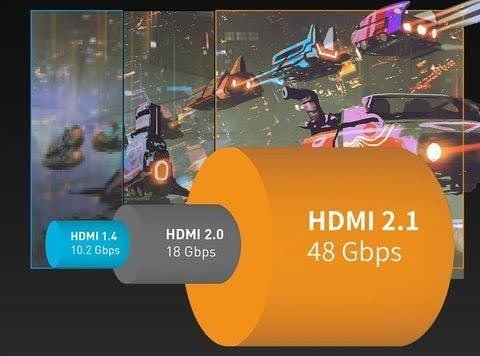
Hdmi 2.0 and hdmi 2.1 are standards developed to improve digital audio and video transmission. Both support high-definition entertainment, but they offer different performance capabilities. Hdmi 2.0 provides a maximum bandwidth of 18 Gbps, making it suitable for 4K resolution at up to 60Hz. In comparison, Hdmi 2.1 supports bandwidth of up to 48 Gbps, allowing compatible devices to deliver 4K at 120Hz and 8K at 60Hz. These improvements make hdmi 2.1 particularly useful for users who want smoother visuals and better performance from modern entertainment systems.
Key Performance Differences Between HDMI 2.0 and 2.1
The most noticeable difference between these standards is their bandwidth capacity and support for advanced display features. Hdmi 2.0 works well for streaming, watching movies, and everyday computer use. However, Hdmi 2.1 offers additional capabilities for demanding applications. Its higher bandwidth supports advanced video formats and improved gaming performance. Features such as Dynamic HDR provide enhanced picture quality, while eARC allows compatible devices to transmit high-quality audio. These improvements create a more immersive entertainment experience for users with supported televisions, sound systems, and gaming equipment.
Why HDMI 2.1 Is Important for Modern Gaming
Gaming is one of the biggest reasons consumers consider upgrading to hdmi 2.1. Modern gaming consoles and powerful computers can benefit from higher refresh rates, reduced screen tearing, and smoother gameplay. Hdmi 2.1 supports several useful gaming technologies.
Variable Refresh Rate (VRR): Helps reduce screen tearing and visual interruptions.
Auto Low Latency Mode (ALLM): Automatically activates low-latency settings on compatible displays.
Quick Frame Transport (QFT): Helps reduce display latency.
4K at 120Hz: Provides smoother motion and improved responsiveness.
These features make hdmi 2.1 an excellent option for serious gamers who want better visual performance and more responsive gameplay.
Choosing the Right HDMI Standard for Your Devices
Selecting between hdmi 2.0 and hdmi 2.1 depends on your equipment, entertainment preferences, and budget. Hdmi 2.0 remains a practical choice for standard 4K televisions, streaming devices, and office monitors. However, Hdmi 2.1 is a better investment for users with newer gaming consoles, high-refresh-rate monitors, and advanced home theater systems. Before purchasing a cable, check the specifications of your television and connected devices to ensure compatibility. Buying a more advanced cable does not automatically upgrade an older device’s capabilities.
How USB C to HDMI Supports Modern Connectivity
USB C to hdmi adapters provide another convenient way to connect compatible devices to external displays. They allow users to connect laptops, tablets, and smartphones with USB-C video output to televisions, projectors, and monitors through hdmi connections. This is particularly useful for presentations, remote working, watching videos, and multitasking. However, users should check whether their USB-C port supports DisplayPort Alt Mode or another compatible video-output technology. Adapter specifications also matter because supported resolution and refresh rates depend on the adapter and connected devices. Choosing a suitable usb c to hdmi adapter ensures reliable connectivity and better display performance.
Significance of HDMI 2.0 vs 2.1 When Buying Accessories
Understanding hdmi 2.0 vs 2.1 is important because it helps consumers choose accessories that match their actual requirements. Purchasing the wrong cable or adapter may prevent users from enjoying the full capabilities of their displays. Hdmi 2.0 offers sufficient performance for everyday entertainment, while hdmi 2.1 provides greater bandwidth and advanced features for demanding applications. Consumers should consider device compatibility, display resolution, refresh rates, and future upgrade plans before making a purchase. This knowledge helps avoid unnecessary spending while ensuring a dependable entertainment and connectivity setup.
Conclusion
Hdmi 2.0 and hdmi 2.1 both provide reliable digital connectivity, but their capabilities serve different purposes. Hdmi 2.0 is suitable for everyday streaming, office work, and standard 4K entertainment, whereas hdmi 2.1 offers higher bandwidth, advanced gaming features, and support for higher refresh rates. Choosing the right standard depends on your devices and performance expectations. Additionally, USB C to hdmi adapters provide convenient connectivity for compatible modern devices. By understanding these differences, consumers can select suitable accessories and enjoy better audio, video, and overall device performance.
Frequently Asked Questions (FAQs)
1. What is the main difference between HDMI 2.0 and HDMI 2.1?
The main difference is bandwidth. Hdmi 2.0 supports up to 18 Gbps, while hdmi 2.1 supports up to 48 Gbps.
2. Is HDMI 2.1 better than HDMI 2.0 for gaming?
Yes. Hdmi 2.1 supports features such as VRR, ALLM, and 4K at 120Hz, making it better for compatible gaming systems.
3. Can an HDMI 2.1 cable work with an HDMI 2.0 television?
Yes. Hdmi is backward compatible, so an HDMI 2.1 cable can work with an hdmi 2.0 television, although performance will be limited by the older device.
4. Do I need HDMI 2.1 for a 4K television?
No. Hdmi 2.0 supports 4K at 60Hz. Hdmi 2.1 is beneficial when you need features such as 4K at 120Hz.
5. Can USB C to HDMI support 4K resolution?
Yes. Compatible USB-C devices and suitable adapters can support 4K output, depending on their specifications and supported refresh rates.
Imagine downloading a new PC game, adjusting its graphics settings, and discovering that the experience is still not what you expected. Perhaps the game takes too long to respond, background programs consume valuable resources, or your graphics card struggles with demanding scenes. Before replacing hardware or spending money on additional software, it is worth examining what your computer can actually handle. Smart Game Booster brings together gaming optimization and hardware compatibility tools, including a useful feature for answering the question: Can my PC run it?
A Gaming Utility That Does More Than Launch Games
Smart Game Booster is designed for Windows users who want additional control over their gaming environment. Rather than functioning as a simple game launcher, it combines several utilities for managing system performance, maintaining drivers, checking compatibility, and monitoring hardware.
One useful feature is automatic game detection. The application can identify installed games, while users can manually add a local game if it does not appear in the list.
This makes it easier to organize supported titles and access their available optimization settings from one interface.
Give Background Applications Less Room to Interfere
A computer running a demanding game has to divide its resources between multiple activities. A browser with several open tabs, unnecessary startup applications, and background utilities can consume memory and processor capacity.
Smart Game Booster addresses this through its PC Boost feature. It provides controls for closing selected background applications and applying supported system adjustments before gameplay.
For gamers who prefer fewer manual steps, its Auto Boost feature can automatically detect game launches and activate the selected gaming settings.
Here are some practical advantages:
- Manage selected background applications before launching games.
- Reduce unnecessary system activity during gaming sessions.
- Access different boosting configurations according to your needs.
- Restore normal settings after completing a gaming session.
- Use additional performance options through supported premium editions.
The important advantage is convenience rather than a guaranteed FPS increase. A computer with limited graphics hardware will still have its original hardware limitations, even after optimization.
Can my PC run it? Find Compatible Games Before Installing
Choosing a game can be difficult when its requirements are unfamiliar. A title might look interesting, but its graphics requirements could be considerably higher than what your computer supports.
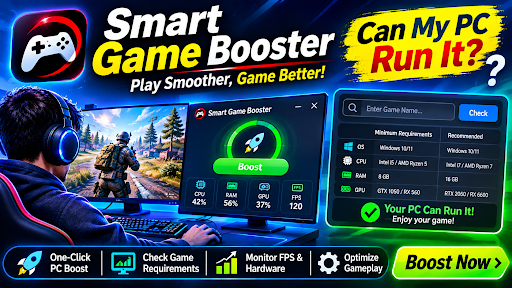
Smart Game Booster includes a dedicated Can I Run It section that helps users compare their PC hardware with the minimum and recommended requirements of individual games.
You can search for a game and examine whether your system meets its published specifications. There is also an option to browse games that your computer can run.
This feature is particularly useful when exploring unfamiliar titles or planning a future hardware upgrade.
Why the Can my PC run it Checker Matters
Check before downloading: Avoid spending time downloading large games before reviewing their hardware requirements.
Understand your hardware: See whether your processor, graphics card, and RAM meet the selected game’s specifications.
Explore suitable titles: Find games that match your current computer configuration.
Plan upgrades intelligently: Identify components that may need attention before purchasing replacement hardware.
Understand performance expectations: Compare minimum and recommended requirements instead of relying on guesses.
Passing a minimum requirements check does not guarantee smooth gameplay at maximum graphics settings. Resolution, drivers, cooling, and game optimization still influence the actual experience.
Monitor What Happens Inside Your PC During Gameplay
A game can become unstable for reasons that are not immediately obvious. High temperatures, excessive memory usage, or changing hardware loads may influence the overall experience.
Smart Game Booster includes a real-time monitoring panel that displays hardware information, resource consumption, and temperature readings. An in-game HUD can also show FPS and hardware temperatures without requiring users to leave their game.
Its temperature alerts can help draw attention to monitored hardware components when they exceed configured thresholds.
This information gives players a more practical way to investigate performance issues instead of immediately assuming that their graphics card needs replacing.
Explore More Than Basic Game Optimization
Another interesting part of the application is its additional maintenance and protection functionality.
The Performance section provides tools for cleaning and adjusting the PC, updating graphics and audio drivers, and defragmenting game files.
Smart Game Booster also includes Guard features for security-related checks, game account protection, and system diagnosis.
These additional options make the application useful for users who want to manage several gaming-related tasks through one program.
Free Access or Premium Gaming Features?
Smart Game Booster offers Free, VIP, and SVIP account options.
The free edition includes basic boosting and manual driver updates. VIP adds more advanced functionality, while SVIP includes additional features such as Network Acceleration.
Before purchasing a subscription, review the current feature comparison and decide whether the additional options are genuinely useful for your gaming habits.
Final Verdict: Is Smart Game Booster Worth Trying?
Smart Game Booster offers a combination of system optimization, game compatibility checking, driver management, and hardware monitoring in one Windows application.
Its built-in Can my PC run it feature is especially useful for gamers who want to examine game requirements before downloading new titles. Meanwhile, PC Boost and real-time monitoring provide additional ways to manage and understand system performance.
For PC gamers who prefer having these tools together instead of searching for separate utilities, Smart Game Booster is worth exploring. The best approach is to test its available features, compare performance under similar conditions, and choose settings that suit your actual hardware.
Creating a useful video tutorial, recording an online class, or capturing an exciting gaming moment requires the right software. A good screen recorder should make it easy to capture desktop activities, record clear audio, and prepare videos for sharing without requiring complicated editing skills. iTop Screen Recorder brings these tasks together in one Windows application, offering several recording modes, editing tools, and additional AI-powered features for different creative needs.
Whether you are a student, professional, gamer, or content creator, this software provides a convenient way to turn everyday computer activities into informative videos.
Capture More Than Just Your Desktop
Different recording projects require different capture settings. A software tutorial might need only one application window, while an online presentation may require the entire desktop along with microphone commentary.
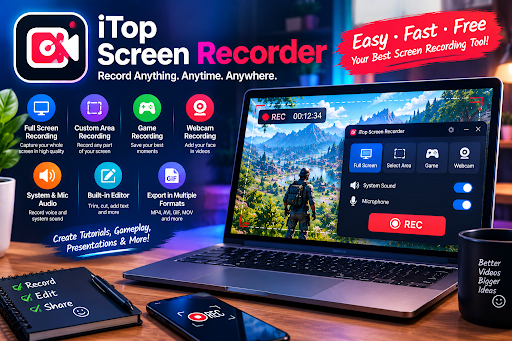
iTop Screen Recorder provides several recording options, including full-screen capture, selected regions, individual windows, webcam recording, audio recording, and gameplay capture.
Users can choose the recording area and decide whether to include microphone audio, computer sounds, webcam footage, and mouse movements.
This flexibility is useful when creating tutorials because viewers can follow the exact actions taking place on the screen rather than relying entirely on written instructions.
Benefits of Flexible Screen Recording
- Multiple recording modes: Capture the desktop, selected windows, webcam footage, or audio according to your project.
- Audio control: Record microphone commentary and computer sounds together or separately.
- Mouse effects: Highlight cursor movement and clicks to make tutorials easier to understand.
- Webcam integration: Add your face to recordings for more personal presentations.
- Convenient controls: Use recording shortcuts to start, pause, resume, and finish a session.
These options make iTop Screen Recorder suitable for both simple recordings and more detailed instructional projects.
Create Gaming Videos With Better Recording Control
Gaming recordings have different requirements from ordinary desktop tutorials. Fast-moving scenes, changing graphics, and background sounds can make recording more demanding.
iTop Screen Recorder includes a dedicated Game recording mode that helps users capture gameplay. Its available controls include microphone input, computer audio, webcam support, FPS display, and Boost options.
The software also offers high-performance recording settings intended to help capture higher-FPS footage more smoothly. Actual recording performance depends on the computer’s hardware and game settings.
This can benefit gamers who want to save memorable matches, prepare walkthroughs, or create commentary videos for their audiences.
Turn Raw Footage Into Shareable Content
Recording is only the first step in producing a useful video. Most projects need some editing before they are ready to publish.
iTop Screen Recorder includes Quick Editor and Advanced Editor options for working with recorded footage and existing video files.
The Quick Editor provides convenient tools for trimming, splitting, cropping, adding filters, stickers, background music, and subtitles. These features can help creators refine their recordings without moving immediately to a separate editing application.
The application also supports different export formats and quality settings, allowing users to prepare videos according to their intended platform.
Explore AI Features Beyond Traditional Recording
One interesting aspect of iTop Screen Recorder is its collection of additional AI-powered tools.
Depending on the available edition, users can explore features such as AI Text-to-Speech, background removal, and video unblurring.
These capabilities provide extra creative options when developing presentations and online content.
For example, AI Text-to-Speech can help users create voice-over material, while background removal can be useful when preparing webcam presentations. Video unblurring offers another option for improving certain unclear visual recordings.
The availability and usage limits of these features depend on the selected plan.
How to Get Started With iTop Screen Recorder
Getting started is straightforward, even for beginners.
- Visit the official iTop Screen Recorder website.
- Download the Windows application and complete the installation.
- Open the software and choose Screen, Webcam, Only Audio, or Game recording.
- Select the capture area and configure your microphone, speaker, and other options.
- Press REC to begin capturing your activity.
- Finish the recording and open the saved file.
- Use the available editing tools to refine your video before exporting it.
Before recording an important presentation, make a short test video to check audio quality and screen capture settings.
Free and Pro: Choose According to Your Requirements
iTop Screen Recorder offers Free and Pro editions.
The free version includes screen, audio, and webcam recording, recording quality up to 1080p at 60 FPS, screenshots, and selected editing and AI features. However, certain restrictions apply, including a 10-minute recording limit.
The Pro edition adds unlimited recording time, watermark-free recordings, higher-quality editing exports of up to 4K at 120 FPS, expanded AI features, and scheduled recording options.
Users should compare the current plans before upgrading to determine whether the additional capabilities are useful for their projects.
Final Thoughts
Choosing the right screen recorder can make educational, professional, and gaming projects easier to manage. iTop Screen Recorder combines desktop capture, gameplay recording, webcam integration, audio controls, video editing, and additional AI tools in one application.
Whether you need to explain a software process, save an online lesson, or prepare gaming content, it offers a flexible collection of features worth exploring. With suitable recording settings and a little preparation, you can transform ordinary screen activities into clear and engaging videos.
Pullover or Full-Zip at $110, and Where They Split

What to Know Before You Replace Your Roof: A Practical Guide for Homeowners

Indoor-Outdoor Living in Austin, Texas: Designing Patios, Porches, and Balconies for Local Life

Who Is Keiko Fujimoto? All About Sunny Balwani’s Former Wife

Bandit Lee Way: Everything to Know About Gerard Way and Lyn-Z’s Daughter

Meet David Scott Simon: Alison Berns’ Husband and His Private Life
-
 Celebrity3 months ago
Who Is Keiko Fujimoto? All About Sunny Balwani’s Former Wife
-
 Celebrity3 months ago
Bandit Lee Way: Everything to Know About Gerard Way and Lyn-Z’s Daughter
-
 News2 months ago
Meet David Scott Simon: Alison Berns’ Husband and His Private Life
-

 Celebrity3 months ago
Who Is Fred Tillman? The Full Story of Kelly McGillis’s Former Husband
-

 News2 months ago
Meet Morgan Kay Beamer: The Todd Beamer’s Daughter
-

 News4 months ago
Meet Carol Marlow: The Full Story of Tony Dow’s Private Ex Wife
-

 Celebrity2 months ago
Who Is Alice Young? Meet Neil deGrasse Tyson’s Wife
-

 Celebrity3 months ago
Meet Kelly Stewart-Harcourt: The Story of Jimmy Stewart’s Daughter