
Blog
Light Up Your Holidays Without Lifting a Ladder


The holiday season has a way of sneaking up fast. One minute you’re carving a pumpkin, and the next, your neighbors already have reindeer glowing on their roofs while your house sits dark and undecorated. If untangling last year’s string lights sounds about as fun as a root canal, you’re not alone — and you don’t have to do it yourself anymore.
Professional holiday lighting has become one of the most popular ways homeowners are transforming their properties this time of year. It’s not just about convenience, either. A beautifully lit home sets the tone for the entire season, creating that warm, magical feeling the moment guests pull into the driveway. At Christmas Light Installers, we’ve built our entire business around making that magic happen without the hassle, the risk, or the wasted weekend.
Here’s why more homeowners are handing off their holiday décor to the professionals this year, and what that experience actually looks like from start to finish.
Why DIY Holiday Lighting Often Falls Short
Stringing lights yourself seems simple enough until you’re thirty minutes into untangling a ball of cords that somehow multiplied in storage. Add in the challenge of climbing onto a steep roofline in December weather, and what started as a festive weekend project quickly turns into a safety hazard.
Beyond the physical strain, there’s the design problem. Evenly spacing bulbs, matching color temperatures, and creating a cohesive look across rooflines, bushes, and trees takes a trained eye. Many homeowners end up with mismatched strands, gaps, or lights that burn out halfway through the season because they weren’t rated for outdoor use. The result rarely matches the picture-perfect display they had in mind.
What Makes Professional Installation Worth It
Hiring a dedicated lighting team changes the entire experience, from planning to takedown. Here’s what that typically includes:
Custom Design Consultation
Every home is different, and a one-size-fits-all approach rarely does justice to a property’s architecture. A good installer walks the exterior with you, discusses your vision, and designs a layout that highlights your home’s best features — rooflines, windows, trees, and walkways included.
Commercial-Grade Materials
Professional installers use high-quality, weather-resistant LED lights built to withstand wind, rain, and freezing temperatures. These bulbs last longer, shine brighter, and use significantly less energy than typical store-bought strands.
Safe, Insured Installation
Ladders, rooftops, and tangled extension cords are a recipe for accidents. Trained technicians know how to secure lighting properly without damaging gutters, shingles, or landscaping, and they carry insurance to protect your property throughout the process.
Maintenance and Repairs
Bulbs burn out. Strands flicker. Storms happen. A professional service typically includes mid-season check-ins to fix any issues, so your display stays picture-perfect from the first snowfall through New Year’s.
Hassle-Free Takedown
Once the season winds down, the same team that installed your lights comes back to take them down and store them properly, saving you the chore of climbing back up that ladder in the cold.
How the Process Works, Start to Finish
Most professional holiday lighting services follow a similar sequence, though the details vary by provider.
- Request a Quote — Share some basic details about your home, like square footage, roofline length, and the look you’re going for.
- Design Consultation — A designer discusses options, colors, and placement to match your vision and budget.
- Installation Day — The crew arrives with all the equipment and materials needed, installing everything safely and efficiently, often in just a few hours.
- Enjoy the Season — Sit back and enjoy a professionally lit home without worrying about bulb replacements or storm damage.
- Takedown and Storage — After the holidays, the team returns to remove and store the lights, so you’re ready to go again next year.
This streamlined process is a major reason homeowners keep coming back year after year. There’s no scrambling to find the right ladder or digging through the garage for last year’s extension cords.
The Christmas Light Installers Difference
Christmas light installation transforms your home into a dazzling holiday display without the stress of planning, climbing ladders, or handling seasonal decorations yourself. From the initial design consultation to the final bulb removal in January, the team manages every detail with care and precision, allowing you to enjoy a beautifully illuminated home while spending more time with family and making the most of the holiday season.
We work with a range of budgets and home styles, offering everything from classic warm white rooflines to full-color displays complete with wreaths, garland, and yard features. Every installation is backed by our commitment to quality materials, careful craftsmanship, and dependable service.
Homeowners who switch to professional installation often say the same thing: they wish they’d done it sooner. There’s something different about pulling into your driveway and seeing a flawless, glowing display waiting for you, with no cords to untangle and no ladder in sight.
Make This Season the Easiest One Yet
Holiday lighting should feel like a gift to yourself, not another item on your to-do list. With a professional team handling the design, installation, maintenance, and takedown, you get all the joy of a beautifully lit home without any of the stress that usually comes with it.
If you’re ready to see what your home could look like this season, reach out to Christmas Light Installers for a free consultation. Let’s make your house the one everyone slows down to admire.

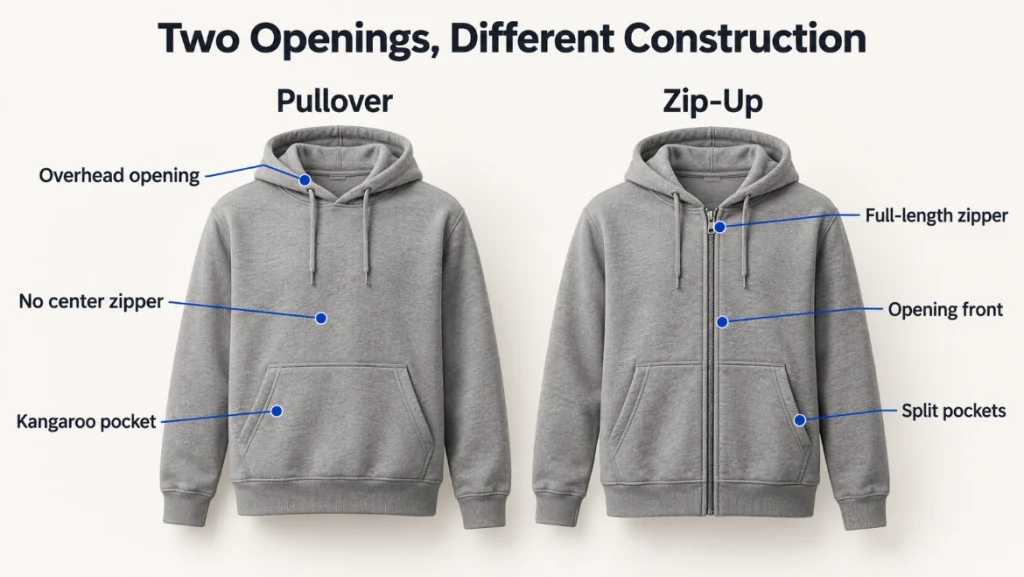
Spend ten minutes in any clothing store, and the hoodie section looks deceptively simple: a rack of pullovers and zip-ups in assorted colors. What that rack hides is a layered set of decisions about fabric weight, silhouette, seam construction, and finishing details that separates a hoodie lasting three years from one that pills and sags after a dozen washes.
How the Hoodie Became a Staple of Contemporary Clothing
The hoodie’s path from athletic locker room to everyday wardrobe fixture is one of the more interesting stories in modern apparel. Originally designed for cold-weather workouts and outdoor labor, it crossed into streetwear during the 1970s and 1980s, picked up cultural momentum through music and sport, and never really let go.
Today the garment sits at the center of athleisure, workwear, and high fashion simultaneously. The global hoodies and sweatshirt market was valued at USD 242.34 billion in 2025 and is projected to reach USD 478.53 billion by 2035, growing at a CAGR of 7.11%. That kind of sustained growth does not happen by accident. It reflects genuine utility: the hoodie works across climates, body types, ages, and occasions in ways that most garments simply cannot.
But why does any of that matter to someone standing in front of a rack trying to pick one out? Because understanding what drives that market helps explain why two hoodies at similar price points can perform so differently over time.
Understanding Different Hoodie Silhouettes and Fits
Fit is the first decision a buyer makes, and it shapes every other construction choice downstream.
Relaxed and Oversized Cuts
A relaxed or oversized hoodie is cut with extra room through the chest, shoulders and sleeves. The silhouette is intentional, not a sizing error. These styles need a heavier fabric to hang properly rather than bunching, and the hood requires proportional depth to balance the wider body.
Athletic and Slim Fits
Athletic-cut hoodies are tapered through the torso and upper arm. Built to move with the body rather than over it, which means lighter fabric weights and often a higher polyester content for stretch and recovery. Side panels or gusseted underarms are common construction features that allow full range of motion.
Boxy and Cropped Silhouettes
Boxy hoodies sit at or above the hip with a straighter hem and squared shoulders. Cropped versions are shorter still. Both depend on fabric with enough body to hold the shape at the hem, which is why mid-to-heavyweight materials show up most often in this category.
Why Fabric Weight Makes a Difference
Fabric weight is measured in grams per square meter, universally abbreviated as GSM. It is the single most reliable indicator of how a hoodie will feel, drape, wear and age. That number on a spec sheet translates directly into how the garment behaves in real use.
Lightweight hoodies fall under 250 GSM. They layer easily and breathe well, but sacrifice structure and long-term durability. Mid-weight options in the 280 to 350 GSM range are the most versatile, offering genuine warmth without excessive bulk. Heavyweight constructions above 350 GSM deliver a substantial, almost architectural feel. The kind that holds its shape wash after wash.
Professional recommendations place hoodie weight within 300 to 400 GSM as the range that balances warmth, durability and comfort, with test results showing 320 to 350 GSM fleece achieving an optimal warmth-to-weight ratio through air entrapment. That range is a useful benchmark whether buying off the shelf or ordering in quantity.
Fleece, French Terry and Other Common Hoodie Materials
Fabric type and weight work together. A 320 GSM French terry hoodie feels and performs differently from a 320 GSM fleece at the same number.
Standard Fleece
Fleece is the most common hoodie fabric, built with a looped interior that traps warm air against the body. The loop structure is what creates that familiar soft hand. Fleece ranges from lightweight polar varieties to dense, heavy-duty constructions used in workwear and outdoor apparel.
French Terry
French terry has loops on one side and a smooth face on the other. It is lighter than standard fleece, more breathable, and tends to drape with a cleaner silhouette. French terry is the fabric behind many premium-positioned hoodies and is the go-to choice for year-round wear in moderate climates.
Cotton and Poly Blends
Pure cotton hoodies breathe well and feel soft against the skin, but they shrink and lose shape more readily than blends. A cotton-polyester blend, typically 50/50 or 60/40 in favor of cotton, adds dimensional stability and cuts down on shrinkage while keeping the natural hand feel. Tri-blends that add rayon or modal introduce a softer drape and a slight sheen.
When ordering custom hoodies for a team, event or brand, the fabric composition matters as much as the color. A 50/50 blend printed with a direct-to-film graphic behaves differently under heat than a 100% cotton fleece, and getting that pairing right affects both print quality and long-term wearability.
The Importance of Details Such as Cuffs, Pockets, and Hoods
The difference between a hoodie that feels finished and one that feels cheap often comes down to components buyers rarely examine consciously.
Cuffs and waistbands: Ribbed cuffs and hem bands need enough elastane content to recover after stretching. A cuff that goes slack after a few wears signals low-quality rib knit. The rib should match the body fabric in weight and color consistency.
Pockets: A kangaroo pocket is the most common construction, but quality varies. A well-made pocket is lined, has clean bartack stitching at the stress points, and sits at a height that is actually comfortable for hands. Zip pockets need hardware that does not corrode or snag.
Hoods: Hood construction is where many manufacturers cut corners. A well-proportioned hood should cover the head without pulling the neckline forward, which means the hood panel needs adequate depth. Flat drawcords with metal or plastic aglets last longer than round cords that fray at the tips.
How Construction Affects Comfort and Durability
Fabric choice sets the ceiling on a hoodie’s quality, but construction determines whether it reaches that ceiling. Two hoodies made from the same material can diverge sharply in durability based on how they are sewn.
Flatlock seams, where the seam allowances are laid flat and stitched on both sides, eliminate the ridge that a standard seam leaves against the skin. This matters most in athletic-fit styles worn close to the body. Coverstitching at the hem and cuffs creates a double row of stitching on the face and a looped stitch on the interior, distributing stress across a wider area and resisting unraveling far better than a single-needle hem.
Thread count and stitch density are less visible but equally important. A tighter stitch-per-inch count means more thread anchoring the seam, which resists pulling and fraying under repeated stress. Quality manufacturers also reinforce stress points at pocket corners and hood attachment seams, where tension concentrates during normal wear.
Choosing the Right Hoodie for Different Seasons and Uses
This is where all the construction details come together in a practical way.
For summer evenings or layering in air-conditioned spaces, a lightweight French terry or cotton-blend hoodie under 280 GSM is the right call. It packs flat, does not overheat, and layers cleanly under a jacket. For fall and early winter in places like the Pacific Northwest or the Great Lakes region, where temperatures drop fast and damp air cuts through thin fabric, a mid-weight fleece in the 300 to 350 GSM range covers most situations. For genuinely cold conditions, outdoor work, or anyone who simply prefers a substantial garment, a heavyweight construction above 380 GSM is worth the investment.
Proper fabric weight selection directly impacts garment performance, wearing comfort, and consumer experience, with different categories requiring distinct weight standards: hoodies demand 300 to 400 GSM to perform as intended. Knowing that range makes it easier to evaluate any hoodie on a spec sheet, a product page, or a rack.
The Takeaway
A hoodie is not a simple garment, even if it looks like one. The fabric weight, seam structure, hood depth and rib quality all determine whether it becomes something worn weekly for years or something donated after a season. And understanding those variables does not require a background in apparel manufacturing. It just requires knowing what to look for before buying.
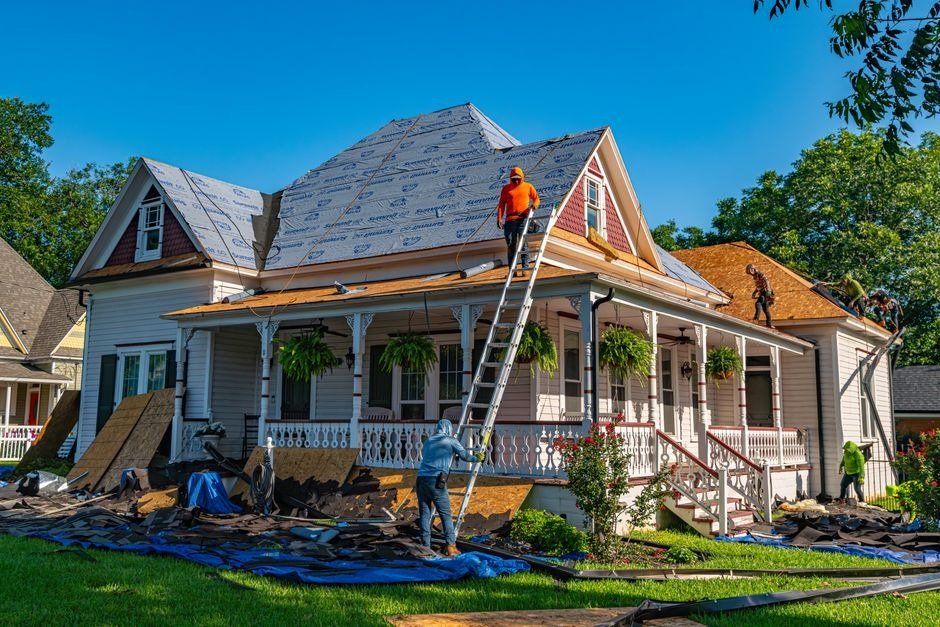
If you’re thinking about replacing your roof, you’re probably balancing cost, timing, and a lot of mixed advice. A roof replacement affects your home’s structure, energy performance, insurance profile, and resale appeal all at once. In a place like Annapolis, where coastal moisture, storms, and seasonal temperature swings put steady pressure on roofing systems, the decision gets even more important. You need clear information, realistic expectations, and a smart plan before any shingles come off.
Annapolis Homes Need Roofing Choices That Fit Local Weather Conditions
Roofing decisions should match the climate your home actually faces. In Annapolis, roofs deal with humidity, salt-laced coastal air, heavy rain, wind-driven storms, and summer heat that bakes exposed surfaces for hours.
That combination can wear down lower-grade materials faster than many homeowners expect. If you’re comparing contractors for an Annapolis replacement roof, ask specific questions about wind ratings, algae resistance, flashing methods, and attic ventilation design suited to local conditions.
You should also think about your home’s architectural style and slope. A steep roof sheds water differently than a low-slope section over a porch or addition. In older Annapolis-area homes, rooflines can be more complex, which raises the importance of installation precision around dormers, hips, and penetrations.
Start by Knowing What a Full Roof Replacement Actually Includes
A full roof replacement is more than tearing off old shingles and nailing down new ones. You’re dealing with the outer covering, underlayment, flashing, ventilation components, drip edge, and sometimes damaged roof decking underneath.
If a contractor only talks about shingle color and price per square, that’s a red flag. The real performance of your roof often depends on the less visible parts. Poor flashing around chimneys or valleys can create leaks even with premium shingles.
You should also ask whether the crew plans a complete tear-off or an overlay. Overlays cost less upfront, but they can hide moisture damage and shorten the roof’s service life. For most homes, a full replacement gives you a cleaner starting point and better long-term reliability.
Watch for the Signs That Repair Is No Longer the Smart Option
A lot of homeowners wait too long because the roof isn’t actively pouring water into the house. That delay can get expensive fast. A failing roof often gives smaller warnings first.
Look for curling shingles, granule loss in gutters, dark streaks, recurring leaks, soft spots, and moss growth that keeps coming back. Inside the house, check the attic for damp insulation, staining, or daylight showing through boards.
Age matters too. Many asphalt shingle roofs start declining around the 20- to 25-year range, though weather exposure and installation quality can speed that up. If you’re paying for repeated repairs every storm season, replacement may be the more efficient use of your money. At some point, patchwork stops being maintenance and starts becoming waste.
Material Selection Affects More Than Just How the Roof Looks
Asphalt shingles remain the most common option because they balance affordability, durability, and design flexibility. Still, not all asphalt products perform the same. Architectural shingles generally offer better dimensional stability and wind resistance than basic three-tab versions.
You may also see options like metal roofing, synthetic slate, or cedar alternatives depending on your budget and neighborhood style. Each material has trade-offs in cost, maintenance, weight, and expected lifespan.
Color matters more than people think. Darker shingles can absorb more heat, while lighter tones may help with solar reflectance. Manufacturer warranties matter too, but only if the installation meets required standards. A strong product installed badly won’t protect your home for long. Material choice should fit your structure, your climate exposure, and your long-term ownership plans.
The Estimate Should Spell Out Scope, Not Just Price
A low bid can look attractive until you realize key details were never included. You should expect a roofing estimate to break down tear-off, disposal, decking replacement terms, underlayment type, flashing work, ventilation upgrades, shingle brand, warranty coverage, and cleanup.
If the proposal feels vague, ask for clarification in writing. Ambiguity during bidding often turns into change orders later. You also want to know who is actually doing the installation. Some companies sell the job, then subcontract everything.
Ask about licensing, insurance, and permit handling. Ask how they protect landscaping, driveways, and siding during the project. A professional estimate reflects operational discipline, not just sales ability. When a contractor explains scope clearly, you get a better sense of how the work will unfold and where your money is going.
Ventilation and Decking Problems Can Change the Entire Project
Homeowners often budget for shingles and forget what’s under them. Once the old roof comes off, hidden issues can appear. Rotten decking, trapped moisture, mold, and sagging sections are common surprises, especially in aging homes.
Ventilation is another major issue. If your attic holds excess heat and moisture, your new roof can age prematurely from the inside out. Ridge vents, intake vents, and proper airflow balance help regulate temperature and reduce condensation.
This part of the project isn’t flashy, but it has a direct effect on roof longevity and indoor comfort. Better ventilation may also support energy efficiency by reducing attic heat buildup in warmer months. When a contractor checks the whole roof assembly instead of just the surface material, you’re more likely to get a roof system that performs the way it should.
Timing, Insurance, and Daily Disruption Deserve More Attention
A roof replacement usually takes only a few days, but planning still matters. Weather delays, material delivery timing, and permit approvals can affect the schedule. If you work from home, have pets, or care for young children, the noise and vibration may be more disruptive than you expect.
Insurance can also shape the process. If storm damage is involved, document everything early with photos, interior leak evidence, and notes from inspections. Don’t assume every aging roof issue qualifies for coverage. Wear and tear is treated differently from sudden damage.
You should also ask when payment is due, what deposit is required, and how final walkthroughs are handled. Good roof replacement planning includes logistics, not just construction. A smoother project usually comes from clear expectations set before the first dumpster arrives.
A Better Roof Replacement Decision Comes From Asking Better Questions
The smartest homeowners aren’t roofing experts. They just know how to slow down and ask useful questions. What materials fit the house and the climate? What hidden costs might come up? How will ventilation be handled? What warranty protection is actually meaningful?
A roof replacement is one of those home projects where shortcuts stay hidden until the next major storm. That makes contractor quality and system design more important than a flashy brochure or a fast quote.
If you approach the process with a clear checklist and realistic expectations, you put yourself in a much stronger position. You’re not only buying shingles. You’re investing in structural protection, comfort, resale value, and fewer future headaches. That’s the standard your next roof should meet.

A comfortable home is not defined by furniture, lighting, or temperature alone. The quality of the air people breathe indoors also matters. Dust, pollen, smoke, fine particles, and gases from everyday household sources can affect indoor air quality, particularly in rooms that remain closed for long periods. Choosing the best rated home air purifier is therefore not simply about buying a popular appliance. It means understanding the pollutants in your environment, the size of your room, and the technology needed to address them.
Why Indoor Air Deserves Attention
Indoor air can contain particles and gases from several sources. Outdoor pollution may enter through doors, windows, and ventilation systems. Cooking, cleaning products, furnishings, paints, and other household materials can also contribute to indoor contaminants. Dust and pollen may circulate through rooms, while moisture problems can encourage mould growth.
The mix of pollutants differs from one home to another. An apartment near a busy road may face different challenges from a home in a quieter neighbourhood. A kitchen, bedroom, home office, and basement may also have different air-quality conditions. This is why selecting a purifier should begin with understanding the space rather than relying on a single product specification.
What Does a HEPA Filter Do?
High-Efficiency Particulate Air filtration is designed to capture airborne particles. A properly specified HEPA filter can remove at least 99.97% of particles measuring 0.3 microns under the relevant test conditions. This makes HEPA filtration useful for reducing many airborne particles, including dust, pollen, and some smoke particles.
However, HEPA filtration does not automatically remove every type of indoor pollutant. Gases and odours require a different treatment approach, such as activated carbon or other suitable molecular adsorption media. Microbial control may require additional technology, depending on the system design and the claims supported by independent testing.
A HEPA home air purifier should therefore be evaluated according to its complete filtration design, not just the presence of a HEPA label. Buyers should check the filter specification, replacement availability, airflow, and performance information.
Match the Purifier to the Room
Room size is one of the most important buying considerations. A purifier must move enough air through its filtration system to provide useful cleaning for the space in which it operates. A unit designed for a small bedroom may be inadequate for a large living room with open connections to other areas.
Check the manufacturer’s recommended room coverage and clean air delivery information where available. Consider ceiling height, room layout, occupancy, and how often doors and windows remain open. If the purifier will be used in multiple rooms, remember that its performance in one space does not automatically extend to the entire home.
Noise is another practical factor. A unit that is too loud may be switched off frequently, reducing the benefit of having it. Look for clearly stated sound levels at different fan speeds and consider where the equipment will be placed.
Look Beyond a Single Filter
Indoor pollution is not limited to visible dust. A complete air-treatment strategy may need to address particulate matter, gases, odours, and biological contaminants. Different technologies perform different functions.
A particulate filtration stage captures airborne particles. Activated carbon or another suitable adsorption medium can help reduce certain gases and odours, depending on its formulation and capacity. Additional microbial treatment technologies may be included in some systems, but buyers should review the evidence and operating conditions behind any pathogen-related claim.
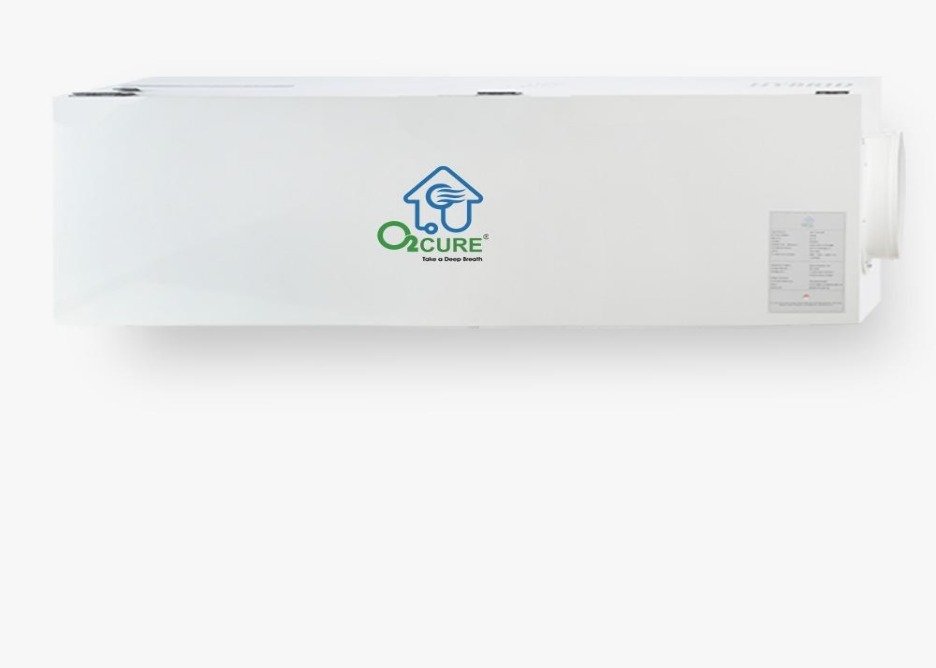
O2Cure describes its TriCure technology as an integrated approach to particulate matter, microbial protection, and gas and odour control. When evaluating any multi-stage system, ask for technical specifications, independent test information, and clarity about which pollutants each stage is designed to address.
Why Air Quality Monitoring Is Useful
A purifier can operate without giving the user much information about changing conditions in a room. Monitoring adds visibility. Depending on the sensors installed, an air-quality monitor may display particulate matter, volatile organic compounds, carbon dioxide, temperature, humidity, or other indicators.
These readings can help users notice patterns. For example, particulate levels may rise during cooking or when outdoor air enters the room. VOC readings may change after cleaning or when certain materials are used. Monitoring can also help facility teams assess whether ventilation and purification strategies need adjustment.
For organisations sourcing solutions, an air quality monitor India B2B requirement may involve more than a single display. Offices, hospitals, schools, hotels, and industrial facilities may need multiple monitoring points, dashboards, reporting, and integration with building operations. Sensor selection should reflect the pollutants and decisions that matter in the particular environment.
Consider Maintenance Before Purchasing
Filters do not last forever. Their service life depends on pollutant loading, usage hours, airflow, and environmental conditions. Buyers should understand how replacement is indicated, how filters are accessed, and what recurring maintenance costs may arise.
A purifier should also be placed correctly. Avoid blocking its air intake or outlet, and follow the manufacturer’s guidance on positioning. Regularly clean the exterior and pre-filter if the product design allows it. A neglected purifier may not deliver the performance expected from its specifications.
How to Compare Products Sensibly
When comparing the best rated home air purifier options, do not rely on ratings alone. Consider verified performance, room coverage, filter design, noise, energy use, maintenance, warranty, and after-sales support. Check whether the product’s claims relate to a specific pollutant and whether the testing conditions are explained.
A suitable HEPA home air purifier should offer clear particulate filtration specifications and accessible replacement filters. If monitoring is important, ask whether the system provides reliable sensor information or can work with a dedicated air quality monitor India B2B solution for wider property requirements.
Conclusion
Cleaner indoor air begins with understanding what is present in a space and choosing technology that addresses those needs. Room size, filtration stages, monitoring, maintenance, and verified performance all deserve attention before a purchase. O2Cure develops air-purification solutions for residential, commercial, industrial, healthcare, and other specialised environments, with an approach that considers the needs of each space. By evaluating HEPA home air purifier technology alongside suitable monitoring and gas-control options, homeowners and organisations can make more informed decisions about the air they breathe.

What Puppy Training Really Looks Like in a Big City

Save Story Online: 9 Best Instagram Story Downloaders for 2026

Why Hoodie Design Is More Complicated Than It Looks: Construction, Weight, and Fit Explained

Who Is Keiko Fujimoto? All About Sunny Balwani’s Former Wife

Bandit Lee Way: Everything to Know About Gerard Way and Lyn-Z’s Daughter

Meet David Scott Simon: Alison Berns’ Husband and His Private Life
-
 Celebrity3 months ago
Who Is Keiko Fujimoto? All About Sunny Balwani’s Former Wife
-
 Celebrity3 months ago
Bandit Lee Way: Everything to Know About Gerard Way and Lyn-Z’s Daughter
-
 News3 months ago
Meet David Scott Simon: Alison Berns’ Husband and His Private Life
-

 Celebrity3 months ago
Who Is Fred Tillman? The Full Story of Kelly McGillis’s Former Husband
-

 News4 months ago
Meet Carol Marlow: The Full Story of Tony Dow’s Private Ex Wife
-

 News3 months ago
Meet Morgan Kay Beamer: The Todd Beamer’s Daughter
-

 Celebrity2 months ago
Who Is Alice Young? Meet Neil deGrasse Tyson’s Wife
-

 Celebrity3 months ago
Meet Kelly Stewart-Harcourt: The Story of Jimmy Stewart’s Daughter